A bobtail truck sitting in the shop during the heating season is a direct revenue problem. Propane and fuel delivery operators run tight windows: fill schedules are locked weeks out, residential customers expect reliability, and a downed truck means borrowed capacity or missed stops. The fleet economics here are ruthless, which is why replacement timing matters more in this industry than almost any other.
We finance bobtail trucks, propane transport tankers, petroleum delivery vehicles, and support trucks for fuel distributors across the country. Minimum transaction of $50,000, with a sweet spot running about $100k to $150k per unit. New iron and quality used equipment both qualify. If your fleet carries B or C credit, that is still workable, and deals up to roughly $400,000 can close on an application-only basis without a full financial package. Funding typically lands in one to two weeks once documentation is complete.
Equipment This Industry Runs
Propane delivery fleets are dominated by the bobtail, the medium-duty workhorse with an onboard pump and metering system. Common specs run from 2,500 to 3,500 gallon tanks on Class 6 or Class 7 chassis, often built on International MV or Freightliner M2 platforms. For bulk transport between terminals and distribution points, larger propane transports running 10,000 to 11,600 gallon DOT-specification MC-331 tanks are the standard tool.
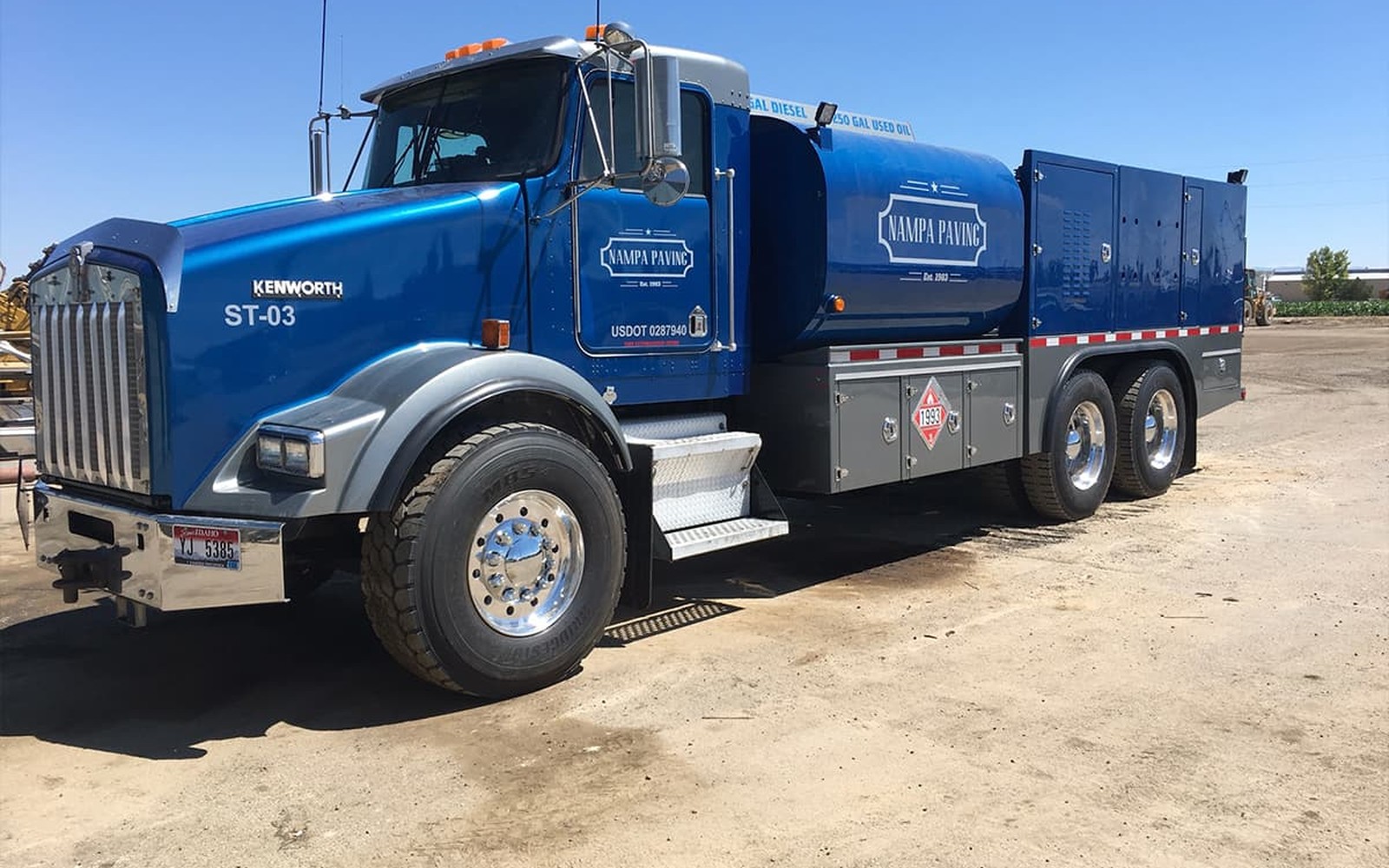
Petroleum distributors additionally run fuel and lube trucks for commercial accounts and agricultural customers, many of which are Class 5 or Class 6 units with split-compartment stainless or aluminum tanks. These vehicles are expensive to spec and build, often arriving with lead times from body upfitters that stretch months. Financing the truck before the body is complete is a normal part of the deal structure, and we handle chassis-only transactions where the upfit follows.
Utility-style fuel and lube trucks used for equipment fueling at remote sites are common in this fleet mix as well. So are straight trucks spec'd for heating-oil delivery in northeastern markets. Whatever the unit, the underlying financing logic is the same: the asset holds value, the business has documented revenue, and the replacement cycle is predictable.
Seasonal Demand and Fleet Planning
Propane demand in the residential and agricultural sectors is heavily seasonal. Heating load drives Q4 and Q1 volumes, which means operators buying a replacement bobtail in October face a tight window between purchase and deployment. Slow financing kills that window. Agricultural customers buying propane for grain drying run a compressed season of their own, typically August through November, where delivery reliability is non-negotiable.
Fleet managers who plan replacement cycles ahead of peak season avoid the worst of this pressure. A unit pulled from service in spring, refinanced or sold and leased back to free working capital, then replaced before fall heating load arrives, is a much smoother operation than an emergency acquisition in December. We work with operators on this kind of advance planning, and our deal structure can include deferred first payments to give new equipment time to earn before the payment cycle starts.
For operators running a fleet sale-leaseback on existing bobtails, the freed equity often funds the deposit on newer spec equipment or covers a body upfit on a new chassis. That recycled capital stays inside the fleet, which is where it belongs.
Who We Work With in This Space
Regional propane distributors adding delivery capacity ahead of a growth season. Petroleum jobbers replacing aged tank trucks before a DOT compliance issue forces the conversation. HVAC and fuel-oil dealers who run a small fleet of five to fifteen units and need to add a truck without tying up line-of-credit capacity. Independent operators who won a new commercial account and need another bobtail to serve it.
We also regularly work with operators whose credit tells a complicated story. A business that went through a slow patch two years ago but has clean recent revenue often lands in B or C tier with conventional banks. Our lenders work that paper. Three months of bank statements plus the application is the starting point for transactions under $400,000. Larger deals bring tax returns and financials into the picture, but the process is the same: fast review, clear terms, funding in roughly two weeks.
If the fleet is growing through acquisition rather than organic growth, operators looking at truck fleet financing across multiple units simultaneously can structure multi-unit deals that close together rather than one truck at a time. That approach saves administrative cycles and locks in terms across the batch.
Documentation and Credit Expectations
For application-only transactions at or under roughly $400,000, the documentation list stays short: signed credit form, recent operating bank records, and the purchase invoice or dealer agreement. No tax returns, no audited financials, no lengthy approval queue. Deals above that threshold add two years of business tax returns and a current balance sheet.
Credit profiles range from strong A-paper operators with established banking relationships to B and C credits where recent revenue is solid but history has some weight on the score. Both get looked at. Startups with less than two years in business face a tighter path but are not automatically excluded; the business plan, the operator's industry experience, and a reasonable down payment tell the story lenders need.
Operators considering truck financing with past credit challenges should expect a conversation about down payment and deal structure, not a flat decline. The equipment itself carries value that affects how the lender sees the risk, and specialized fuel delivery trucks hold residual value better than general freight equipment in most markets.
Related Financing Structures
Beyond standard term financing, propane and fuel delivery operators have several structures that fit the business well. A TRAC lease keeps monthly outlay lower than a purchase loan and leaves a terminal rental adjustment clause at end of term, giving the operator flexibility on whether to return, purchase, or roll the equipment. For operators who want the truck on the balance sheet from day one, a dollar buyout lease delivers that outcome with predictable end-of-term ownership.
Operators with equity in existing bobtails can convert that equity into working capital via a cash-out refinance. The trucks keep running, the rate may reset favorably if the original financing was done under less competitive terms, and the capital goes where it is needed, whether that is a new chassis deposit, a facility improvement, or simply reinforcing cash reserves before heating season. Fuel delivery operators in markets like Kansas City and Minneapolis who run heavy seasonal demand often find that cash-out refinance timed in spring gives them the operating cushion they need heading into fall.