Fleet managers focused on monthly cash flow and total cost of ownership often find that a terminal rental adjustment clause lease structures the truck payment more favorably than a conventional loan. The monthly payment is lower because you are not financing 100 percent of the truck's value over the term; you are financing the difference between the purchase price and a predetermined residual value, then settling up at the end.
TRAC leases are one of the most common financing structures in commercial trucking for exactly this reason. Major carriers, mid-size fleets, and sophisticated owner-operators use them to align truck payments with the productive life of the equipment, maintain a predictable monthly cost, and preserve flexibility at lease end to either return the trucks, extend, or buy them out at a market-tied price.
We structure TRAC leases on commercial trucks starting at $50,000. The structure applies to new and used equipment and to most standard truck types used in commercial fleets. Funding after approval typically runs one to two weeks.
How a TRAC Lease Works
The terminal rental adjustment clause is the key element that distinguishes a TRAC lease from other lease structures. Here is what it actually means in practice:
At the beginning of the lease, both parties agree on a residual value for the equipment at lease end. This number represents what the truck is expected to be worth when the lease term expires. The monthly payment is calculated on the difference between the purchase price and that residual, not on the full purchase price. A truck with a $120,000 purchase price and a $30,000 residual generates a payment calculated on $90,000, not $120,000.
At lease end, the TRAC provision adjusts the final settlement based on what the truck actually sells for in the market. If the truck sells for more than the agreed residual, you receive the difference. If it sells for less, you pay the difference. This mechanism means neither party is taking a one-sided bet on depreciation; the residual risk is shared rather than entirely borne by the lessor (as in an operating lease) or predetermined as a fixed buyout (as in a finance lease).
In practice, most TRAC lease end scenarios follow one of three paths: the operator exercises a purchase option at or near the residual value to retain the trucks, the trucks are traded in or sold through the dealer network and the settlement is calculated, or the operator returns the trucks and the lessor handles the remarketing.
For operators managing sleeper tractor replacement cycles where trucks are traded every three to four years, the TRAC structure aligns well because the residual is set to approximate the expected trade-in value, keeping the monthly payment close to a true cost-of-use figure.
Payments, Residuals, and Term Options
TRAC lease terms for commercial trucks commonly run 36 to 60 months. The monthly payment depends on the truck's purchase price, the agreed residual value, the implied rate in the lease, and the term length. Longer terms and higher residuals both reduce the monthly payment, while shorter terms and lower residuals increase it.
Setting the residual correctly is important. An aggressively high residual minimizes the monthly payment but creates risk at lease end if the truck's actual market value falls short. A conservative residual increases the monthly payment but reduces end-of-term exposure. Most operators and lessors land somewhere in the middle, using published commercial truck value benchmarks as a reference point for the residual negotiation.
The rate structure in a TRAC lease is embedded in the rent factor rather than stated as an APR, which makes direct comparison with loan rates less straightforward. We convert the effective rate to an equivalent interest rate equivalent when comparing TRAC lease options against conventional loans, so the comparison is apples to apples.
Tax treatment is a meaningful consideration in the TRAC lease versus loan decision. Under a TRAC lease, the monthly payments are typically deductible as operating expenses rather than the interest-only portion being deductible (as with a loan). Section 179 deduction treatment may also differ. These are accounting and tax questions worth discussing with your advisors before committing to a structure, particularly for larger fleet transactions.
TRAC Leases on New vs. Used Trucks
TRAC leases are most commonly written on new commercial trucks, but used trucks qualify as well. The key variable is establishing a credible residual value for the equipment at lease end, and that calculation is easier with new trucks because the depreciation curve is better established from a known starting point.
For used trucks, a TRAC lease requires agreement on the current value and the expected future value, with less historical depreciation data to anchor the residual estimate. Lenders writing TRAC leases on used equipment typically apply more conservative residuals to account for this uncertainty. A used flatbed truck at 300,000 miles or a used dump truck with several seasons of vocation use may still qualify for a TRAC structure, but expect the residual to be set conservatively.
For operators comparing a TRAC lease against a conventional equipment loan on used trucks, the advantage of lower monthly payment may be smaller on used equipment (because the depreciation during a three to four year lease term on an already-aged truck is a smaller percentage of total value). In those cases, a conventional used truck financing loan may be simpler and comparably priced.
Which Fleets Benefit Most from a TRAC Structure
TRAC leases make the most sense for operators with a few specific characteristics:
- Active replacement cycles: fleets that trade trucks regularly rather than running them to end-of-life get more value from the flexibility a TRAC structure provides at lease end
- Cash flow prioritization: operators who need to minimize monthly payment for a given truck value, and who are comfortable with a residual settlement at the end
- Tax situation favoring operating expense deductions: businesses where monthly lease payment deductions are more valuable than depreciation plus interest deductions
- Established businesses with clean credit: TRAC lessors prefer working with operators who have a track record, since the residual risk exposure at lease end requires confidence in the relationship
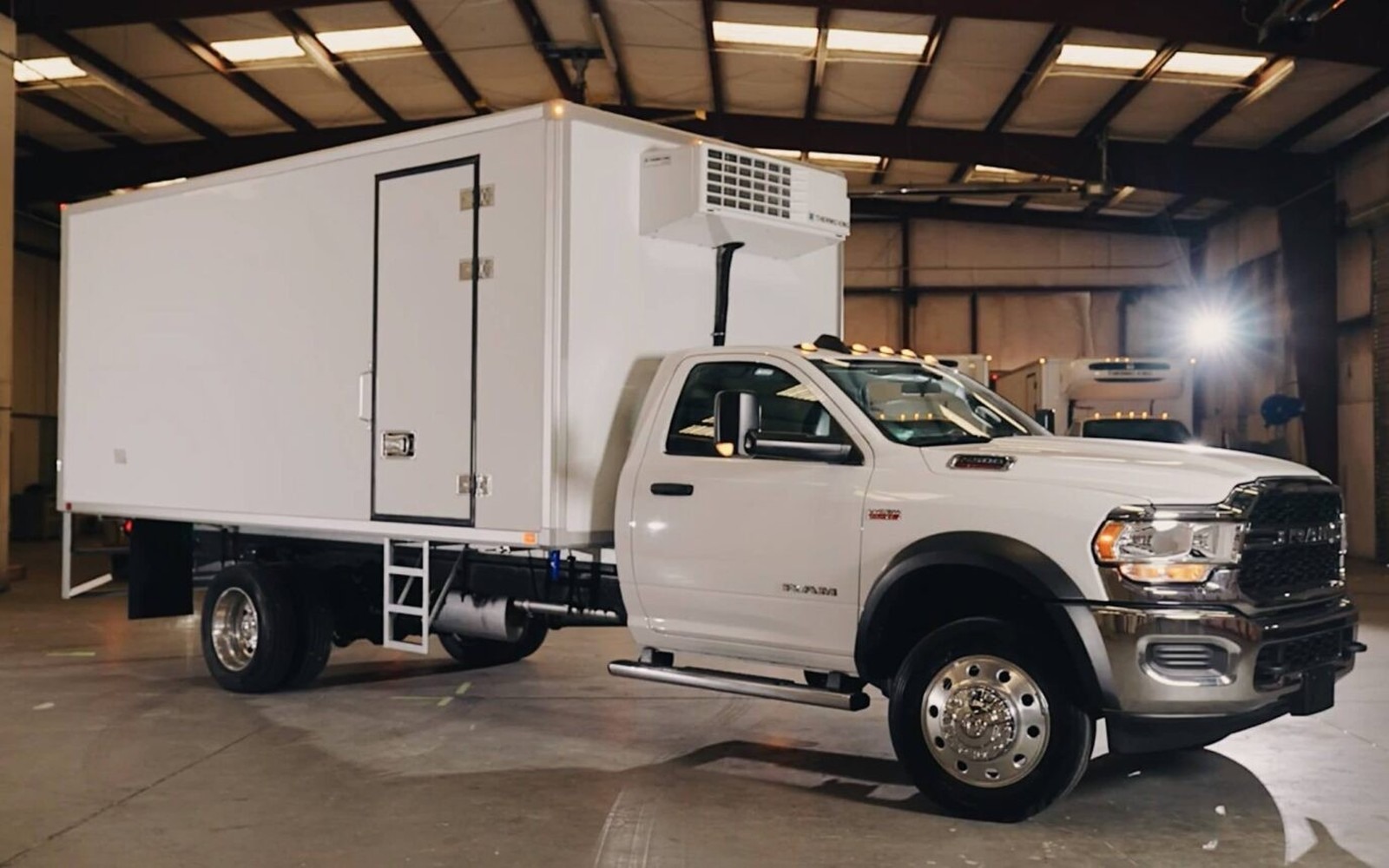
Fleets in long-haul freight running active trade cycles, and carriers in food distribution replacing refrigerated units on regular schedules, are among the most natural fits for TRAC lease structures because their equipment rotation patterns align well with the lease mechanics.
Operators who prefer to own their equipment free and clear and do not want any residual exposure at lease end may find a dollar-buyout lease or a conventional loan to be a better fit. The TRAC structure involves end-of-term flexibility but also end-of-term settlement responsibility, and not every operator wants to manage that.
Explore Whether a TRAC Lease Fits Your Fleet
TRAC leases are worth comparing against conventional loans before you commit to a structure. Tell us what trucks you are acquiring, your target monthly payment, and how you typically handle end-of-life disposal of your equipment. We will model both structures and show you the real cost comparison.