Every truck in a fleet has a cost-per-mile story, but the math changes significantly when the unit is a severe-duty vocational truck running 20-ton payloads through tight urban corridors twice a day. Autocar builds specifically for that environment. The DC-64, their primary production model, is a purpose-built severe-service cab-over designed for refuse collection, roll-off, and heavy vocational work where a conventional Class 8 tractor would be oversized, underspecced for stop-and-go duty, or simply unable to navigate the loading radius. Financing an Autocar fleet requires lenders who understand specialty vocational collateral, because a DC-64 in active refuse or roll-off service holds and earns differently than a line-haul day cab.
We work with operators running Autocar trucks in waste hauling, municipal solid waste contracts, construction roll-off, and heavy industrial vocational applications. Our minimum is $50,000 per transaction, with most Autocar fleet deals running from $150,000 into the mid-seven figures for municipal or private waste-hauling fleets. App-only sign-off stretches to about $400k for qualified fleets. New and used Autocar units both qualify, and B and C credit profiles are considered on a case-by-case basis. Funding typically runs about one to two weeks from approval. Refinance, sale-leaseback, and cash-out refinance are all available for existing Autocar fleets.
The Autocar Platform: What Makes the DC-64 Different
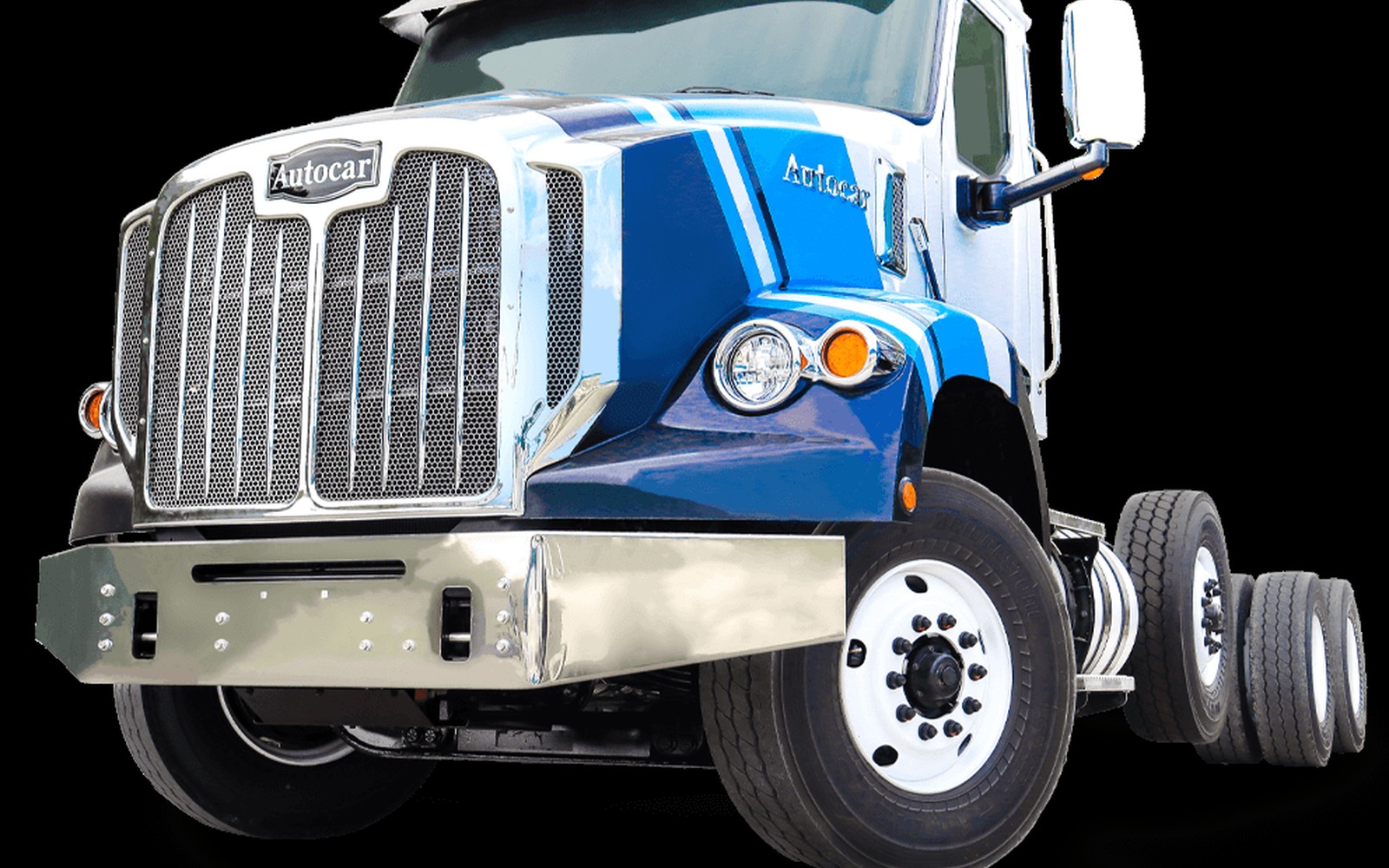
Autocar has operated as a specialty severe-duty truck manufacturer for well over a century, making them one of the oldest commercial truck brands in the United States. The Autocar DC-64 is a cab-over-engine severe-service truck built from the ground up for high-cycle, high-stress vocational work. Unlike conventional cab-over configurations adapted from line-haul platforms, the DC-64 is engineered specifically for the short-cycle, high-impact duty that refuse collection and roll-off operations demand: repeated full-load stops, hydraulic actuation, narrow street maneuvering, and daily cycles that would accelerate wear on less purpose-built iron.
The DC-64 runs a set-back front axle and a flat nose profile, which gives it a tighter turning radius than a long-nose conventional, a critical spec for urban refuse routes and construction sites with limited staging space. It accepts a range of powertrain options and is body-agnostic, meaning it can be upfitted for front-load, rear-load, and side-load refuse bodies as well as roll-off hoist configurations. That flexibility makes it the dominant choice for private waste haulers and municipal refuse fleet operators who want a single chassis platform across a mixed operational profile.
From a collateral standpoint, a well-maintained Autocar DC-64 in active contract service holds value more predictably than most vocational trucks because the buyer pool is concentrated among operators who know exactly what the truck is worth to a running route. That market dynamic matters when lenders evaluate residual value for lease or term loan structures.
Who Runs Autocar Fleets and Why It Matters for Financing
The operators who buy Autocar trucks almost exclusively are running waste hauling fleets or heavy vocational operations where the truck's specialized design justifies a price premium over a conventional Class 8. Private waste haulers with municipal contracts, haulers bidding on construction debris removal, and industrial facilities handling bulk material removal are the core Autocar buyer. These operators typically have longer fleet replacement cycles than general freight carriers because the DC-64 is built to absorb abuse that would accelerate wear on a line-haul platform.
The financing structure for an Autocar fleet tends to reflect this longer cycle. Where a freight carrier might replace a day cab on a four to five year schedule, a refuse operator might run a properly maintained Autocar for eight to twelve years before the total cost of upkeep tips past the cost of replacement. That lifecycle difference affects how we structure the term, how lenders look at residual value, and how a sale-leaseback is priced on older iron that still has real productive life ahead of it.
Municipal and governmental fleet buyers are also a significant Autocar customer segment. Local governments running their own refuse or public works fleets tend to follow formal procurement schedules and often need documentation compatible with public finance requirements. We work with those situations on a case-by-case basis, though the core structure looks similar to private fleet financing with some additional documentation requirements on the buyer side. Operators running mixed Autocar and other brands for construction fleet applications also come through regularly, particularly for roll-off configurations operating alongside conventional dump trucks.
How Autocar Fleet Financing Is Structured
Autocar DC-64 trucks are not low-ticket items. New units in refuse or roll-off configuration with body typically come in above $200,000 fully upfitted, and fleet purchases of four or more units move quickly into seven-figure territory. That price point means application-only approval covers smaller fleet additions, but most Autocar fleet deals involve at least a basic financial package: three months of bank statements, a business profile, and sometimes a year of financials for larger transactions.
Terms run from 36 to 84 months on new units, with shorter terms more common on older used iron. Lease structures including TRAC leases and dollar-buyout leases are available and are often the preferred structure for operators who want to preserve working capital and match the depreciation treatment to their accounting setup. A TRAC lease is particularly common on vocational trucks because it allows the operator to set a terminal rental adjustment clause that matches the expected residual at the end of the term, reducing monthly payments relative to a straight loan at the same rate.
For fleet refinancing on existing Autocar notes, the primary trigger we see is operators who locked in rates a few years ago and are now carrying higher payments than the current market would justify. A straightforward payoff refinance can lower the monthly burden and free cash flow for the next acquisition, a contract deposit, or a body rebuild on a truck that has more productive years ahead of it. Payoff refinances on Autocar trucks close on the same one to two week timeline as new purchases.
From Application to Funded: What the Process Looks Like
Most Autocar fleet financing transactions start with a simple credit application covering the business entity, principals, and basic financial information. For deals under roughly $400,000, that application plus three months of bank statements is often sufficient to get a credit decision. Larger transactions, particularly multi-unit fleet additions or sale-leaseback deals on fleets valued above $500,000, typically require at least one year of business financials and sometimes two.
Once credit is approved, the process moves to documentation: purchase agreement or invoice from the dealer, bill of sale for used transactions, title search and lien payoff for refinances, and insurance binder. For fleets with existing body upfits, the lender needs documentation of the upfit cost and installer. We coordinate the documentation and work with the dealer or seller directly where that accelerates the process.
Closing scheduled once the package is complete is the normal timeline after a complete package is submitted. Operators who have dealt with bank commercial lending where decisions take four to six weeks find this timeline a material improvement. We move faster because we work with lenders who specialize in commercial fleet and vocational equipment, not general commercial credit desks that treat a refuse truck like a piece of real estate collateral.
Operators looking at a Fleet Sale-Leaseback on their existing Autocar fleet should budget extra time for the appraisal step, since lenders want a current third-party value on trucks not coming through a dealer sale. For truck fleet financing on new units purchased from the Autocar dealer network, the process is the most direct: invoice, application, approval, and a wire to the dealer.