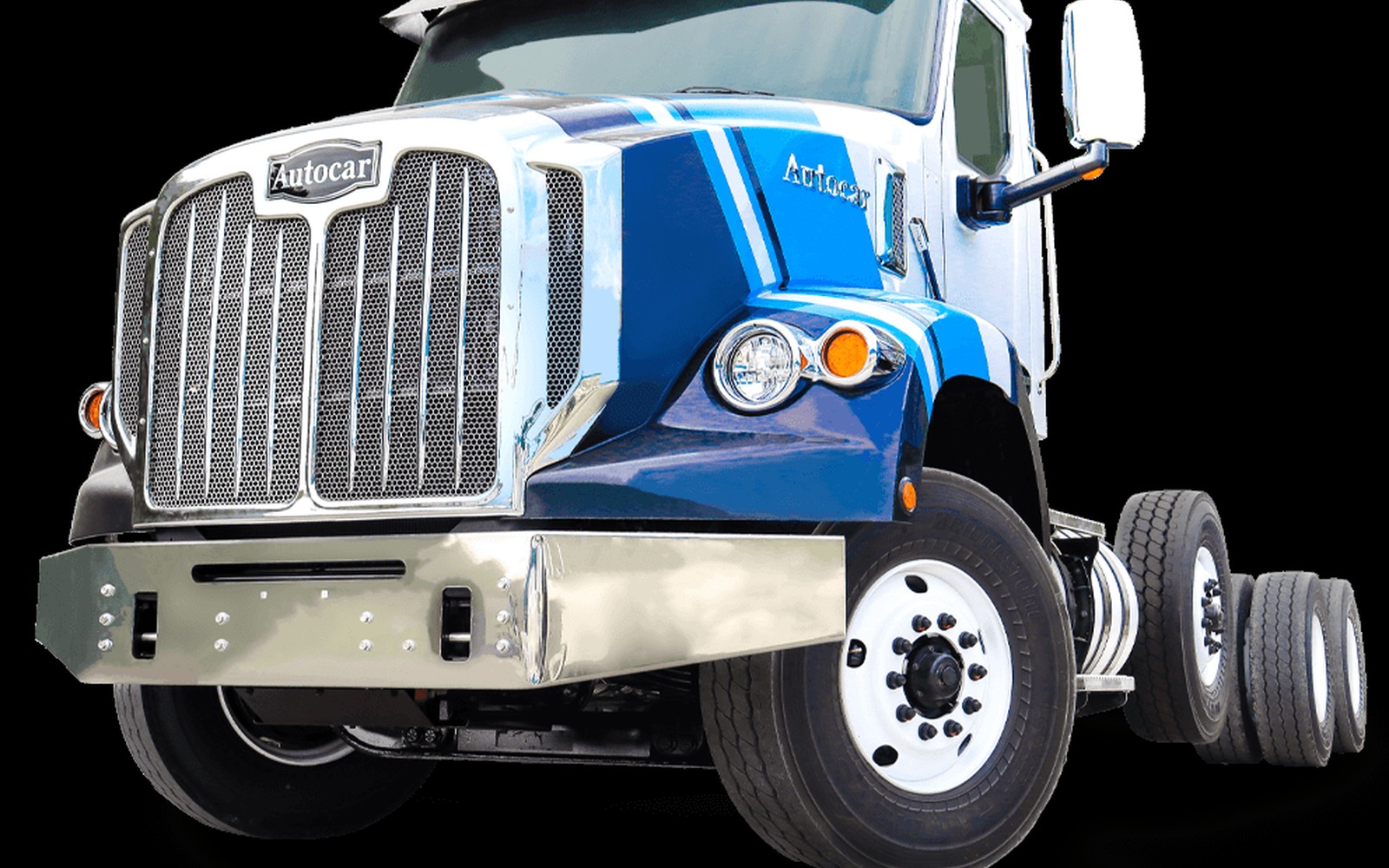
Truck Fleet Financing
Autocar DC-64 Fleet Financing

Open My Fleet Line

Autocar DC-64 Fleet Financing

    Finance Autocar DC-64 refuse and severe-duty trucks for your fleet. New and used units, B/C credit considered, decisions in 1-3 business days. $50K minimum.

Refuse fleets running the Autocar DC-64 are not buying a truck for occasional heavy use. They are buying a purpose-built severe-duty platform designed to handle full-compression rear-load and front-load cycles every single day, year after year. The DC-64's set-back front axle configuration and cab-over-engine design give the packer body a shorter overall length for the same wheelbase, which matters on residential routes where tight turns and street clearance are daily constraints. Financing this class of asset requires a lender who understands vocational truck economics, not one who treats it like a standard line-haul unit.

We structure Autocar DC-64 fleet financing for waste haulers, municipal sanitation departments, transfer station operators, and private haulers running residential and commercial collection routes. The DC-64 is a significant capital commitment: a new unit with a packer body typically clears $200,000 to $300,000 or more depending on the body manufacturer and specification. That scale requires an experienced lender panel and a finance partner who knows how this asset class is valued at end of life.

Our transactions in the refuse truck segment start at $50,000, with most DC-64 deals falling well above that into the $150,000 to $300,000 range. For multi-unit orders, facilities can be structured to accommodate the entire fleet build at once, often using a combination of application-only approval for the first tranche and a full underwriting package for larger volumes.

The DC-64 Platform: Why It Dominates in Severe-Duty Collection

Autocar has built vocational trucks since 1897 and the DC-64 reflects that long specialization. The cab-over-engine design with a forward-positioned cab gives drivers excellent visibility during the low-speed, high-maneuverability work of residential collection. The set-back front axle (the distinguishing feature of the DC-64 versus conventional-cab refuse trucks) moves the axle rearward relative to the front bumper, reducing the effective turning circle and allowing the truck to navigate cul-de-sacs and tight residential streets that would force a conventional-cab truck to make three-point turns.

The DC-64 is typically specified with a GVWR in the 54,000 to 66,000-pound range depending on the axle configuration, making it a Class 8 truck in all applications. Engine choices are customer-specified, with common selections including the Cummins X12 and X15, and the Detroit DD13 and DD15. All of these powerplants are well-supported in fleet maintenance environments with national parts availability. Autocar also builds the DC-64 with a fully customizable cab that allows fleet managers to specify entry height, step configurations, mirrors, visibility packages, and a range of driver ergonomics that reduce fatigue on high-cycle daily routes.

The body interface is a critical engineering consideration on the DC-64. Autocar publishes a body builder guide with cab-to-axle dimensions, frame rail specifications, hydraulic provisions, and PTO mounting points that allow body manufacturers like McNeilus, Heil, and Labrie to build a tight, certified integration. Fleet operators care about this because a body that is not properly integrated causes premature frame wear and creates warranty complications on both the chassis and the body.

  • Cab-over-engine design with set-back front axle
  • GVWR typically 54,000 to 66,000 lbs (Class 8)
  • Engine options include Cummins X12/X15, Detroit DD13/DD15
  • Purpose-built for refuse, recycling, and severe-duty vocational use
  • Custom cab ergonomics: step height, entry, mirrors, visibility packages
  • Compatible with McNeilus, Heil, Labrie, and other body manufacturers

Who Finances DC-64 Fleets Through Our Office

Private haulers operating residential and commercial collection contracts are the primary buyer of the DC-64. A collection contract is the asset that supports the truck: the route generates predictable monthly revenue and the truck's role is to execute that route reliably every day. Lenders who understand the refuse sector value the contract-backed cash flow favorably. Waste hauling fleet operators who can show active contracts and a clean equipment maintenance record are the strongest applicants in this asset class.

Municipal sanitation departments and public works agencies purchase the DC-64 for government-managed collection fleets. Government buyers often run competitive bid procurement processes and may use lease structures that carry through multi-year budget cycles. Our team handles government fleet transactions with the documentation and process requirements that public entities need, without requiring the municipality to fit into a private-sector workflow. Government and municipal fleet financing in the refuse sector has distinct characteristics from private operator financing and we manage both.

Transfer station operators who run DC-64 units for on-site material movement and transfer loading represent a smaller but consistent buyer segment. These applications run the truck in an environment with very short cycles and high daily engine hours, which affects the maintenance profile and the residual value calculation. We account for application type when structuring the term on vocational units.

Regional haulers acquiring smaller route operators and absorbing their fleets also come to us for financing that covers multiple DC-64 units simultaneously, sometimes including units with existing financing that needs to be consolidated or paid off. A fleet refinance on an acquired fleet can reduce the blended rate across the unit pool and normalize the payment schedule under the new ownership.

Documentation and Credit for DC-64 Transactions

A DC-64 at full spec with a packer body is a $250,000-plus transaction for many buyers. At that level, most lenders want more than just an application. Three months of business bank statements are the standard add-on for transactions in this range, and some lenders will also ask for a basic operating statement or tax return for the most recent year. This is not unusual for heavy vocational equipment at this price point, and fleet operators who run organized books move through the underwriting faster.

Credit profile assessment for refuse trucks is nuanced. The asset has strong lender acceptance because it is purpose-built, identifiable, and there is a functioning secondary market for used refuse trucks. Used DC-64 units with complete service records and known body condition are liquid assets in a way that some specialty equipment is not. That liquidity gives lenders more comfort in extending credit to operators who may have a mixed credit history, because the collateral recovery path is clear.

Operators with B or C credit profiles who have active collection contracts are often bankable when a prime lender would decline. The contract cash flow, demonstrated route history, and the strong collateral position of the truck and body combine to support the underwriting. We access lenders who specialize in this credit tier for commercial vehicles and refuse equipment specifically. Our B and C credit fleet financing lender panel includes participants with direct refuse sector experience.

For established haulers with strong credit, the DC-64 may qualify for application-only treatment if the total transaction falls under approximately $400,000. A single unit at full spec may cross that threshold, at which point the full documentation package is needed, but the process is still straightforward for an organized operator.

Related Models and Financing Programs

The DC-64 sits within Autocar's severe-duty product family. Operators needing a lighter-duty or alternative configuration should look at Autocar's other vocational models. For heavy-haul and transfer applications that involve different axle configurations, the Kenworth T880 or Mack Granite are common alternatives in the heavy vocational segment. We finance all of these through the same team and can structure a facility that covers a mixed fleet of Autocar and conventional-cab heavy trucks.

Operators looking at the full Autocar fleet financing picture should discuss a fleet facility rather than individual unit loans when they are buying three or more units at a time. A fleet facility can be structured to add units over a 12 to 24-month window as routes are won and equipment is specified, rather than requiring a separate application for each purchase.

Sale-leaseback is a practical option for haulers who own DC-64 units outright and want to unlock the capital tied up in paid-off iron. A fleet sale-leaseback on a group of paid-off refuse trucks can generate six figures in operating capital without selling a single route or giving up any equipment. The trucks stay on the road under a lease-back arrangement, and the cash goes to wherever the business needs it most: a new contract bid, driver wages, or the next batch of equipment.

For operators comparing the DC-64 to conventional-cab refuse alternatives, the financing structure is the same regardless of cab configuration. The relevant variables are the body manufacturer, the GVWR, the engine, and the maintenance record. Whether you are financing a DC-64, a Kenworth T880 with a rear-loader, or a Mack LR Electric, the underwriting framework is the same and we handle all of them. A sibling model worth knowing is the Mack Granite, which is commonly specified for refuse applications as a conventional-cab alternative.

Start Your Autocar DC-64 Financing Application

Tell us how many units, the body configuration you are spec'ing, and whether you are buying new or absorbing a used fleet. We know the DC-64 and we know refuse sector underwriting. Most decisions come back in one to three business days, and funded deals close in about one to two weeks.

Fleet Financing Questions

Can I finance the chassis and the packer body as one transaction?

Yes, and that is typically the cleanest approach. We fund the chassis at dealer delivery and the packer body at completion, or we can fund the full combined amount at close if both invoices are in hand. Body manufacturers like McNeilus and Heil bill separately from Autocar, so a two-draw structure is common. We coordinate with both vendors so the timing works without you having to bridge the gap out of pocket.

What is the typical useful life lenders use for a DC-64 with a rear-load packer body?

Lenders commonly model a ten-year useful life for a new DC-64 with a quality packer body under normal refuse application duty cycles. This is not a hard rule and individual lenders vary, but it is the baseline that informs term availability. A well-maintained DC-64 can easily run 12 to 15 years in fleet service, but financing terms rarely extend beyond 72 months on new vocational trucks of this class.

We are buying out a competitor's three-truck DC-64 fleet. Can you finance the acquisition?

Yes. Acquisitions of existing refuse truck fleets are a known transaction type. We need the purchase agreement, documentation on each unit (title, service records if available, any existing liens that need to be paid off), and we will run the underwriting on the combined package. If the acquired trucks have existing financing, we coordinate the lien releases with the prior lender as part of closing.

How does the set-back axle affect residual value at end of term?

The set-back axle configuration is a feature in the secondary market for refuse trucks, not a liability. Buyers of used refuse equipment understand the DC-64's design and value the maneuverability it provides on residential routes. Secondary market pricing on used DC-64 units with documented service records is generally solid relative to conventional-cab alternatives in the same vintage and mileage range. Lenders familiar with the refuse segment account for this when setting residual assumptions.

Is sale-leaseback available on a DC-64 fleet that is fully paid off?

Yes. Sale-leaseback on paid-off refuse trucks is a straightforward transaction when the units are in good mechanical condition and the body is serviceable. We arrange for an equipment appraisal, the lender purchases the trucks at appraised value, and the proceeds are paid to you at closing. You continue to operate the trucks under a lease agreement at a monthly payment that is typically lower than what you were paying on the original purchase loan. It is a clean way to unlock capital without disrupting operations.

What engine options does the DC-64 typically come with and does engine choice affect financing terms?

The DC-64 is commonly spec'd with the Cummins X12 or X15, or the Detroit DD13 or DD15. Engine choice does not directly affect financing terms; lenders are evaluating the truck as a complete asset, not a specific powertrain. What matters more is whether the engine is a common, well-supported variant with national parts availability, which all four of those powerplants are. An unusual or low-production engine on a vocational truck can affect secondary market liquidity and therefore lender residual assumptions.

Fleet quote desk

Put Autocar DC-64 on the road.

Finance Autocar DC-64 refuse and severe-duty trucks for your fleet. New and used units, B/C credit considered, decisions in 1-3 business days. $50K minimum.