The terms drop deck and step deck are used interchangeably in many markets, but in specialized open-deck hauling there is a meaningful distinction. Step decks have a single drop behind the front upper section. Double-drop configurations, sometimes specifically called drop decks, introduce a second drop that creates an extremely low center section, getting deck height down to 18 to 24 inches in the well between the axles. That extra drop makes a real difference for loads that cannot fit on a step deck but do not need the full permit overhead of a lowboy. Understanding where each configuration applies and financing the right trailer for the load type is where we add value for open-deck carriers.
We finance drop deck and double-drop trailers for heavy equipment haulers, industrial machinery movers, utility sector carriers, and specialized freight operators who regularly move loads in the height range that demands more clearance than a single-drop step deck provides. Manufacturers including Landoll, XL Specialized Trailers, Trail King Industries, and Talbert Manufacturing produce the equipment most commonly traded in this category. New double-drop trailers run from approximately $60,000 to $120,000 in standard configurations; specialized and extendable units go higher. Our minimum transaction is $50,000, and most drop deck acquisitions are single units or small batches.
Double-Drop Configuration and Load Envelope
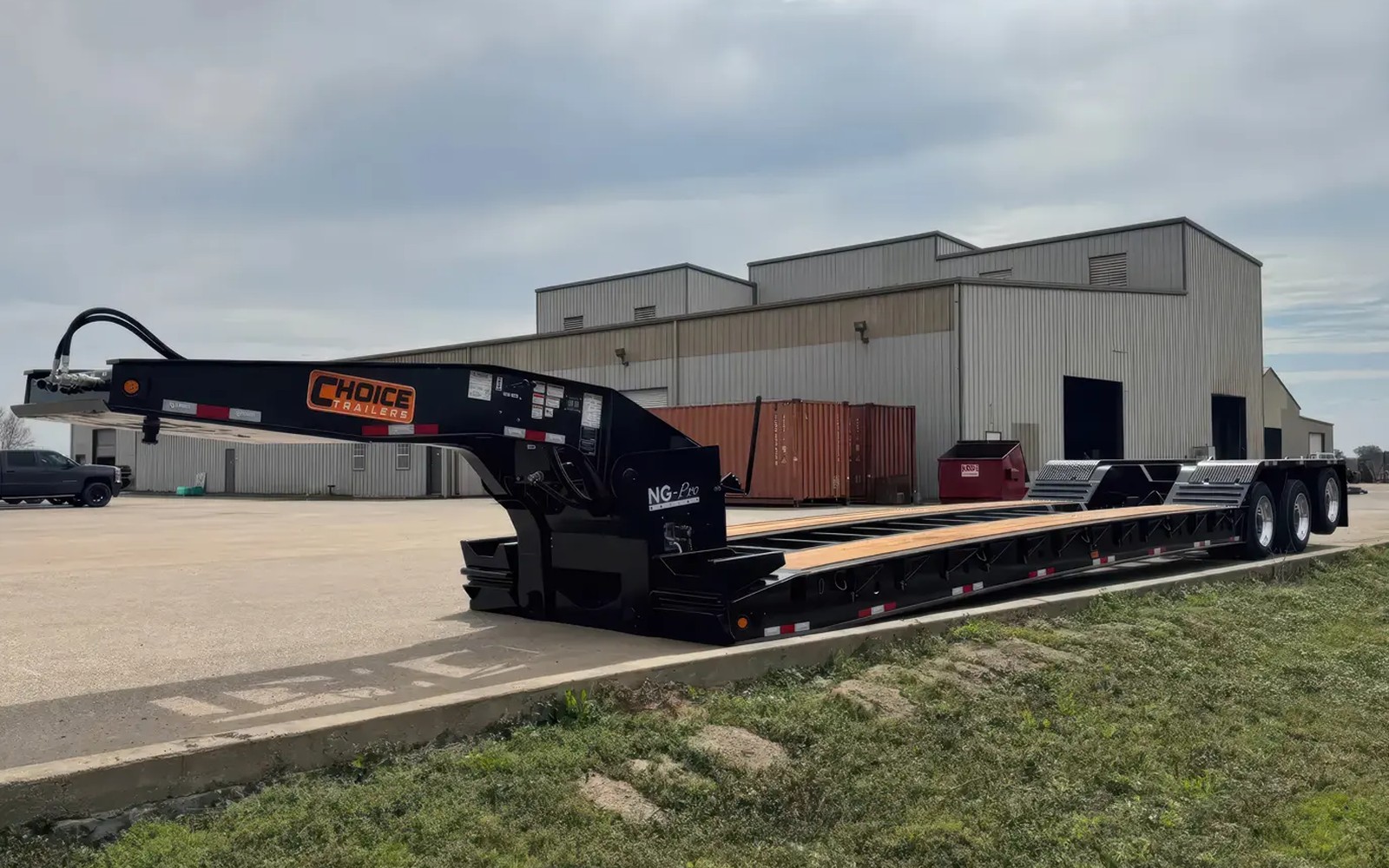
A double-drop trailer, also called a lowboy step deck or a double-drop step deck in some markets, has three deck levels: the upper front section (gooseneck area), the low center section (the well), and the rear section that steps back up over the rear axles. The well section sits at approximately 18 to 24 inches above the road surface, compared to 34 to 36 inches for a single-drop step deck and 52 to 56 inches for a standard flatbed.
The load well typically runs 25 to 35 feet in length depending on trailer configuration. Freight that must stay in the well is limited to those dimensions, and freight that extends into the front or rear upper sections faces the same height constraints as a standard step deck for those portions of the load. Understanding where the load sits relative to the well boundaries is essential to determining whether a double-drop is the right configuration or whether a full lowboy with RGN capability is needed.
Extendable double-drop trailers can telescope the well section to accommodate longer loads that would otherwise require a special permit for excess length. Extendable configurations are more expensive but provide significant versatility for carriers who regularly move long, tall industrial loads such as turbine components, large pressure vessels, and structural elements for industrial facilities.
Detachable gooseneck double-drops, where the front section can be removed to allow end-on loading without ramps, combine the features of an RGN and a double-drop. These units are the most expensive and versatile configuration in the double-drop category, used by carriers who move a high volume of heavy equipment that cannot be ramped but does not require the extreme low-deck of a true lowboy.
Side weight distribution and load positioning are critical on double-drop trailers given the low center of gravity in the well. Experienced heavy-haul operators know that load placement, blocking, and securement on a double-drop requires more care than on a standard flatbed or even a single-drop step deck, and that this complexity is part of the expertise that specialized open-deck carriers build over time.
Operators Who Run Double-Drop Trailers
Utility sector contractors who move large transformers, power generation equipment, and substation components are among the most consistent double-drop users. A transformer that weighs 80,000 pounds and stands 12 feet tall needs to clear bridge clearances, and the double-drop well provides the best combination of low deck height and structural capacity for that category of equipment. Power utilities, independent power producers, and the contractors who maintain and replace their infrastructure equipment are steady customers for carriers with double-drop capability.
Industrial machinery movers who transport large manufacturing equipment, including presses, injection molding machines, CNC machining centers, and industrial boilers, often need the double-drop envelope for machines that exceed step-deck height limits but whose weight and dimensions do not justify the full permit complexity of a lowboy move. A 12-foot-tall machine that fits the double-drop well and falls within legal weight limits is a legal load on the double-drop; on a standard flatbed it would need permits or disassembly.
Wind energy construction contractors moving nacelles, tower sections, and foundation components have driven significant demand for specialized double-drop and heavy-haul equipment over the past decade. The nacelle of a large utility-scale wind turbine weighs 60,000 pounds or more and has specific dimensional requirements that make double-drop and specialized equipment the standard transport solution in this market.
Carriers who add double-drop capacity to complement an existing fleet of step deck trailers and lowboy trailers often find that the double-drop fills the gap between what the step deck can handle and what requires the full lowboy treatment, which reduces the volume of loads that need the highest-complexity equipment.
How Drop Deck Financing Is Structured
Double-drop trailer purchases in the $60,000-to-$250,000 range largely fall within the application-only financing threshold. One-page application, three months of business bank statements, approval in 24 to 48 hours, closing scheduled once the package is complete. Higher-end specialized and extendable units may exceed the application-only threshold and require full financial documentation, but the review process is consistent regardless of document type.
Double-drop trailers hold value well in the secondary market because of specialized demand and relatively low supply. Well-maintained units from reputable manufacturers trade actively among heavy-haul carriers, and the used market for quality equipment stays tight. This collateral strength supports favorable advance rates and term structures compared to commodity trailer types.
B and C credit heavy-haul operators are reviewed with context. This is a niche market that requires real expertise, and carriers who have built that expertise over years often have credit histories that include slow periods tied to industry cycles in construction, energy, or utilities. The underlying business quality is the more important variable.
For operators who own double-drops free and clear and want to access the equity, a Fleet Sale-Leaseback is a clean structure. Heavy-haul carriers who have paid off specialized trailers over years of consistent revenue often have significant equity in equipment that they need to keep in service. The leaseback extracts that equity without retiring the asset. Pair that inquiry with a look at fleet refinancing options on units still under payment, and we can often restructure the whole trailer book to optimize cash flow.
For a fuller picture, see New Authority Truck Financing, TRAC Lease, and $1 Buyout Lease.