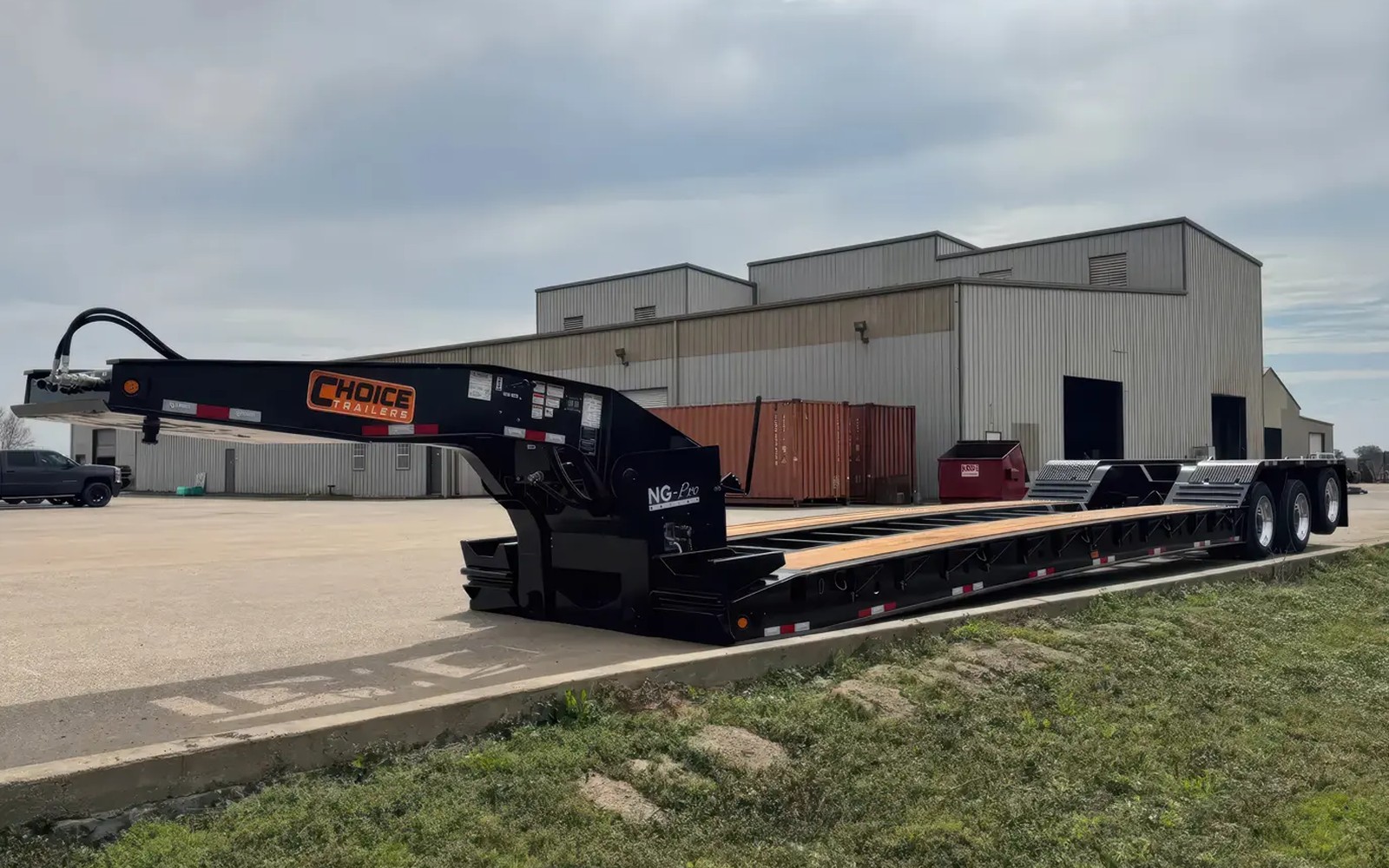
Freight that is too tall for a standard flatbed but does not need the extreme low-deck height of a lowboy trailer lands on a step deck. Agricultural implements, construction equipment, industrial machinery, and modular structures that clear a standard 53-inch flatbed deck by only a few inches often move on step decks instead, which drop the main deck to around 34 to 36 inches above the ground. That lower position gives eight to ten additional inches of legal height before permit requirements kick in, which keeps many loads moving as legal freight rather than as permitted oversized moves.
We finance step deck trailers for construction and equipment transport carriers, agricultural machinery haulers, industrial machinery movers, and general open-deck freight operators who carry tall or non-standard loads. Single-drop step decks in 48-foot and 53-foot configurations, and double-drop variations that add a second drop for even lower main deck height, are both eligible. Manufacturers including Fontaine Trailer, XL Specialized, Reitnouer, and Benson International produce commonly traded step deck equipment. New step decks run approximately $40,000 to $70,000 in standard configurations; our minimum transaction is $50,000, and step deck acquisitions usually reach that comfortably as a single unit or in small batches.
Step Deck Configurations and Freight Types
A step deck has two deck levels: an upper deck behind the kingpin that sits at standard flatbed height (approximately 52 to 56 inches above the road), and a lower main deck that drops to roughly 34 to 36 inches after the step. The step itself, or the raised section at the front, allows the trailer to clear the landing gear and provides a structural transition point. Freight that is too tall for the lower deck can be placed on the upper deck in some configurations, and freight that must stay low rides the main deck.
Agricultural equipment is one of the most common step-deck loads. Combines, planters, tillage equipment, and large self-propelled implements regularly exceed legal height on a standard flatbed but move as legal freight on a step deck with careful load placement. Operators serving the agricultural equipment rental and dealer distribution market, particularly in the Corn Belt states and the Great Plains, run step decks as their primary trailer type.
Construction equipment and machinery, including compact track loaders, skid steers, mini excavators, and paving equipment, often fits the step deck envelope without the overhead of a lowboy. A carrier who moves a mix of compact construction equipment and medium-duty machinery can serve a much wider range of loads with a step deck than with a standard flatbed, while avoiding the specialized complexity of a lowboy RGN configuration for loads that do not require that level of deck height reduction.
Modular buildings, pre-manufactured wall sections, and large commercial HVAC units are also common step-deck freight. The lower deck position reduces roof height on modular loads and allows taller pre-manufactured sections to move without permits when the load dimensions otherwise cooperate. Manufactured housing components, mobile office units, and containerized equipment pods are other loads regularly seen on step decks.
Step deck trailers equipped with ramps allow wheeled or tracked equipment to be self-loaded onto the main deck, which eliminates the need for a separate loader at the pickup site. Ramp-equipped units are more versatile but require more vertical clearance at delivery if the ramps must drop below the trailer tail to create a usable ramp grade.
Step Deck Operator Profiles
Agricultural equipment dealers and transport companies serving the dealer distribution network are among the heaviest step deck users in the country. Moving combines and planters from the manufacturer's distribution hub to dealer lots, and then from dealer lots to farms, creates steady seasonal demand for step deck capacity, particularly in spring and fall. Carriers who have established relationships with the major ag equipment brands or their regional distributors run fleets of step decks around this freight cycle.
Owner-operators who haul a mix of open-deck freight and want maximum flexibility often choose step decks over standard flatbeds. The ability to carry standard flatbed freight on the upper deck plus taller loads on the lower main deck makes a single step deck more versatile than a standard flat. For an owner-operator trying to maximize load options from available spot market freight, that versatility has real value.
Carriers who specialize in construction equipment mobilization but do not want to invest in the more expensive lowboy inventory for every move often run step decks alongside a single lowboy. The step deck handles the majority of moves, including compact equipment and smaller machinery, while the lowboy handles the loads that genuinely need extreme deck height reduction.
For operators running open-deck freight in the Southeast, carriers servicing ports in Savannah or Jacksonville often use step decks for imported machinery and equipment that comes off vessels and needs to move to end users without permit overhead. A step deck with the right configuration clears many common import equipment types as legal freight and keeps the freight moving faster than a permit process.
Credit Review and Approval Process
Step deck transactions under $400,000 use our application-only process: one-page credit app and three months of business bank statements. This covers most single-unit and two-unit acquisitions in this equipment category. Approval is typically issued within 24 to 48 hours of a complete file, and closing follows after title and lien paperwork. For carriers who need a unit quickly to fill a known load commitment, that timeline usually works.
B and C credit operators are reviewed. Open-deck freight, including step-deck work, is often done by smaller owner-operators and family carriers who have built solid operational track records but have credit files that show the ups and downs of running a small trucking business. Bank statement revenue, time in business, and the quality of the freight relationships are all factored in alongside credit score.
Operators who already have one or more step decks financed with us can add units quickly by referencing the prior file and updating their bank statements. Repeat transactions move faster than initial applications. If you are building a step-deck fleet incrementally over several seasons, a fleet equipment line of credit can pre-approve a total credit line so each unit draws against existing capacity rather than triggering a new full review.
Carriers with below-average credit scores should still submit. A score that looks challenging on its face can be offset by strong bank statement cash flow, a long track record in the business, or a solid load relationship that demonstrates the revenue basis for the acquisition. We do not decline based on score alone; the full file tells the real story.
Related routes worth a look include TRAC Lease, $1 Buyout Lease, and Seasonal & Deferred-Payment Financing.